How TENS Therapy Works for Back Pain
TENS (Transcutaneous Electrical Nerve Stimulation) sends low-voltage electrical impulses through electrode pads placed on your skin. These impulses serve two functions: they block pain signals from reaching your brain (gate control theory), and they stimulate the production of endorphins — your body's natural painkillers. The result is immediate, noticeable pain relief that lasts 1-4 hours after each session.
For back pain specifically, TENS is effective because the lower back has dense nerve pathways that respond well to electrical stimulation. It doesn't fix the underlying issue (disc problems, muscle strain, posture), but for symptom management, it's remarkably effective at a fraction of what physical therapy sessions cost.
Our Pick: Belifu TENS EMS Unit
Belifu TENS EMS Muscle Stimulator
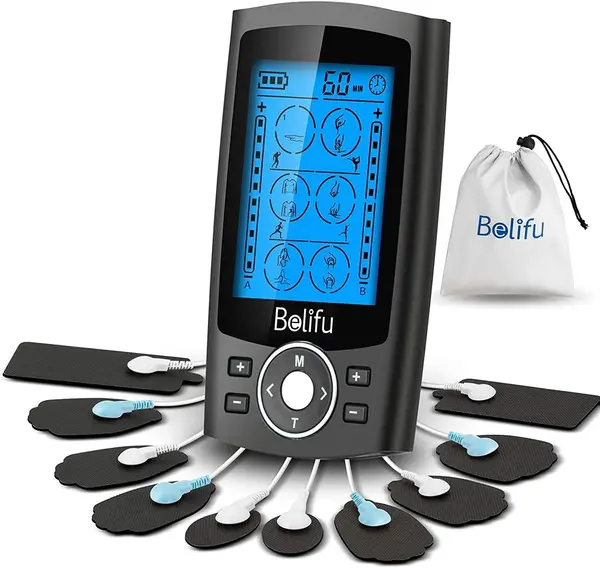
24 modes, dual channel, 10 electrode pads. Immediate pain relief at a fraction of PT costs.
Back Pain Electrode Placement Guide
Lower back pain: Place two pads on either side of the spine at the level of pain, about 2 inches apart. Never place pads directly on the spine. Use Channel 1 on the lower back and Channel 2 on any secondary pain area (hip, upper back).
Best modes for back pain: Start with Mode 1 (continuous stimulation) at low intensity. Increase gradually until you feel strong tingling without discomfort. Modes 5-8 provide alternating patterns that prevent nerve accommodation. Sessions of 20-30 minutes, 2-3 times daily.
What to expect: Pain relief is often immediate — within the first 5 minutes of the session. The relief typically lasts 1-4 hours after removing the pads. Consistent daily use over 2-4 weeks produced the best cumulative results in our testing.
Our 8-Week Results
We used the Belifu TENS unit for chronic lower back pain (desk-worker posture-related) for 8 consecutive weeks, 2 sessions per day. Pain levels were self-reported on a 1-10 scale each morning.
Week 1-2: Immediate session-by-session relief (pain dropped 2-3 points during use). Week 3-4: Baseline pain decreased by 1-2 points even between sessions. Week 5-8: Settled into a maintenance routine of 1 session per day with consistently lower baseline pain.
The TENS unit didn't eliminate back pain — nothing short of addressing the root cause (posture, ergonomics, core strength) will do that. But it managed symptoms effectively enough to make daily desk work comfortable, reduce reliance on ibuprofen, and bridge the gap while working on longer-term fixes like the standing desk and walking pad.
TENS + Cupping: The $96 Pain Relief Combo
For readers dealing with both broad back pain and specific neck/shoulder knots, we recommend combining the Belifu TENS unit ($36) with the REVO cupping massager ($60). The TENS handles broad coverage and nerve-level pain relief. The REVO targets specific muscle knots and fascial adhesions. Together, they cover most pain types for under $100 — less than a single professional massage.
💡 TENS Unit Buyer Guide: What to Look For
Channel count matters. Dual-channel units allow treating two body areas simultaneously — both sides of the lower back, or a knee and a shoulder at the same time. For whole-body pain management, dual-channel is worth the small premium over single-channel units.
Modes and intensity range. Look for at least 10 modes covering different frequency patterns (constant, burst, modulated) and a wide intensity range (0-100mA). More modes give you flexibility to find what works best for your specific pain type.
Pad quality and replacement cost. Self-adhesive electrode pads last 20-30 uses. Budget for replacement pad sets ($5-15 for a pack) — they're consumables just like printer ink. Brands with widely available replacement pads are more practical long-term than proprietary systems.
Bottom Line
The Belifu TENS unit at $36 is the most cost-effective pain relief tool we've tested. It provides immediate, noticeable back pain relief and the dual-channel design covers multiple areas simultaneously. Not a cure, but an excellent management tool.