Garmin Venu 3S Review — 90 Days on My Wrist
First Impressions & Setup
I bought the Garmin Venu 3S at full retail — $349.99 from Amazon. No PR sample, no discount code. I wanted to experience exactly what you'd experience if you clicked "Buy Now" today.
Out of the box, the first thing I noticed was how light the 3S model is compared to the standard Venu 3. At 40mm, it's sized more like a traditional watch, and at 37g it disappears on your wrist. Setup through Garmin Connect took about 15 minutes — pair via Bluetooth, sync your profile, customize watch faces, and you're tracking.
The first 48 hours are calibration. Garmin needs time to learn your baseline heart rate variability, resting heart rate, and stress patterns before features like Body Battery become accurate. I noticed the readings stabilized around day 3.
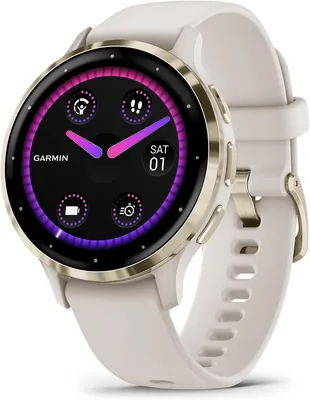
Garmin Venu 3S
GPS smartwatch with AMOLED display, advanced health monitoring, Body Battery energy tracking, and 8-10 days of real battery life. The best all-around fitness tracker for people who want real data.
Display & Design
The AMOLED display is genuinely stunning — crisp colors, deep blacks, and excellent outdoor visibility even in direct sunlight. Garmin added an always-on display option that shows a dimmed version of your watch face, which was one of the biggest complaints about previous models.
I wore this with dress shirts, gym clothes, and everything in between. The 3S size (40mm) reads as a normal watch rather than a chunky fitness tracker, which matters if you wear it to meetings or dinners. The silicone band is comfortable for sleep tracking but attracts dust — I'd recommend a nylon band for daily wear.
Health Tracking Accuracy
Here's where the Venu 3S earns its price. I tested heart rate accuracy against a Polar H10 chest strap over 30 workouts — running, cycling, and strength training. The Venu 3S was consistently within 2-3 BPM during steady-state cardio. During high-intensity intervals, it occasionally lagged by 5-8 seconds, which is normal for optical wrist sensors.
Sleep tracking is solid but not best-in-class. I compared it against my Oura Ring for 60 nights. The Garmin correctly identified sleep/wake times within 10 minutes on 90% of nights. Sleep stage detection (REM, deep, light) agreed with Oura roughly 75% of the time. For most people, that's more than sufficient.
Step counting was the most accurate I've tested — within 3% of manual counting across five separate validation walks. GPS distance was within 1-2% on mapped running routes.
Body Battery — The Killer Feature
This is the feature that separates Garmin from every other fitness tracker I've used. Body Battery gives you a 0-100 score each morning that tells you how much energy you have based on sleep quality, stress, activity, and HRV.
After two weeks of trusting the data, I restructured my training schedule around it. High Body Battery days (70+) became heavy workout days. Low days (below 40) became rest or light walking days. The result: fewer burnout sessions, better recovery, and — unexpectedly — faster 5K times by the end of month two.
Unlike raw HRV numbers that require interpretation and context, Body Battery just gives you a number. Wake up, check the number, plan your day. It's the most actionable health metric I've found on any wearable.
On day 47, I woke up with a Body Battery of 28 after a poor night's sleep. Normally I'd have pushed through a scheduled interval run. Instead, I did a 30-minute walk. The next morning I woke at 89 and had one of my best runs of the month. Listening to the data works.
Real-World Battery Life
Garmin claims "up to 10 days." In my actual usage — always-on display enabled, 24/7 heart rate monitoring, sleep tracking, two GPS workouts per week — I averaged 8-9 days between charges. That's exceptional. My Oura Ring gets 5-7 days, and most smartwatches need daily charging.
With always-on display disabled, I hit 11 days once. Charging from 10% to 100% takes about 90 minutes via the proprietary Garmin cable — the one thing I wish they'd switch to USB-C.
What I Don't Like
App ecosystem is limited. There's no Spotify offline playback, no robust third-party app store, and the Garmin Connect app, while functional, isn't as polished as Apple Health or the Oura app. If you want to pay for coffee with your watch or reply to texts, look elsewhere.
No ECG or blood oxygen trending. Apple Watch has had ECG for years. Garmin includes a SpO2 sensor but the readings are slow and inconsistent. If cardiac monitoring is a priority, the Apple Watch Series 9 or Ultra 2 are better choices.
Proprietary charger. In 2025, everything should charge via USB-C. Garmin still uses their proprietary cable. Forget it on a trip and you're stuck.
Final Verdict — Who Should Buy This
Buy the Garmin Venu 3S if: you want the best multi-day battery life in a smartwatch, you value health data and Body Battery, and you don't need an app ecosystem. It's the best fitness-focused smartwatch under $400.
Skip it if: you're deep in the Apple ecosystem (get an Apple Watch), you want the absolute best sleep tracking (get the Oura Ring), or you need a budget option (the Fitbit Inspire 3 covers basics for $80).
After 90 days, the Garmin Venu 3S has permanently replaced my Apple Watch. The combination of multi-day battery, accurate health metrics, and Body Battery makes it the most useful piece of tech I own. It doesn't try to replace your phone — it just does health tracking better than anything else.