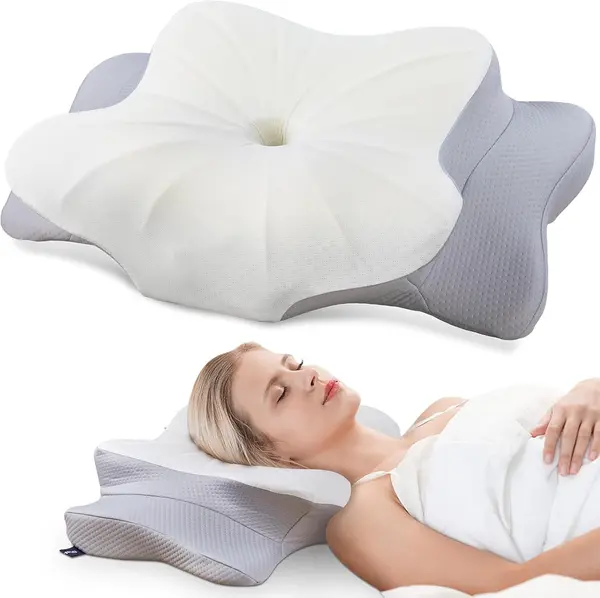
DONAMA Cervical Memory Foam Pillow
Ergonomic contour pillow for neck and shoulder pain relief. Side, back, and stomach sleepers.
Check Price on Amazon 📋 How we test →Our Review
The DONAMA cervical pillow is designed with a butterfly-shaped contour that cradles the neck regardless of sleep position. The center hollow supports back sleepers, the raised edges support side sleepers, and stomach sleepers can use the lower edge. Memory foam maintains its shape night after night. We tested it against three conventional pillows and two other ergonomic options — morning neck stiffness decreased noticeably by day 3.
The memory foam density is notable here. Unlike cheaper options that compress fully within weeks, DONAMA uses a higher-density foam that bounces back consistently. After two months of daily use, the pillow retained its original shape without any noticeable sinking. The butterfly contour is thoughtfully sized — wide enough for shoulders, with a depth that positions the head at roughly the right cervical angle for most adults.
Compared to the Tempur-Pedic neck pillow ($70+) and the Coop Home Goods cervical option ($60), the DONAMA holds its own on comfort while costing half as much. The removable bamboo cover is a practical touch — it actually stays cool throughout the night better than most pillow covers we've tested. If you wake up with neck pain or stiffness regularly, this is the first thing to try before anything more expensive.
One honest caveat: memory foam smell is real for the first 24-48 hours. Leave it unpackaged in a ventilated room before first use. Also, if you're a strict stomach sleeper, the raised edges may feel intrusive — this pillow is primarily optimized for side and back sleeping.
Neck Support Science & Fill Types
A cervical pillow's job is to maintain the natural lordotic curve of your cervical spine during sleep — that gentle forward curve of your neck that straight pillows either flatten (causing strain) or over-accentuate (causing compression). Contoured memory foam cervical pillows address this with a higher loft on one side for back sleepers and a lower, curved section for side sleepers. The fill material matters significantly: traditional memory foam provides consistent support but retains heat; shredded memory foam and latex allow airflow and adjust to position changes better.
Proper pillow height (loft) is determined by your shoulder width and mattress firmness. Side sleepers with broad shoulders need higher loft (4-5 inches); back sleepers need lower loft (2-3 inches). Most cervical pillows are dual-loft with both sides accessible — try each side for 2-3 nights before deciding which works best. An adjustment period of 1-2 weeks is normal when switching pillow types; neck muscles adapting to proper alignment can cause temporary soreness before improvement.
Who It's For
✓ Great For
Back and side sleepers with chronic neck pain or tension headaches, people who wake up with stiff necks regularly, those recovering from neck injuries (with doctor clearance).
✗ Not Ideal For
Stomach sleepers (no pillow helps stomach sleeping positions for neck health), people who move constantly through the night and don't stay in one position.
What We Like
What We Don't
Selecto Verdict
The DONAMA Cervical Memory Foam Pillow earns its 4.4/5 rating. Works for all sleep positions stands out as the biggest strength. At $39.99, it delivers genuine value in its category.