Oura Ring Gen 3 Review — 6 Months of Sleep Data
Why I Chose the Oura Ring
I wanted the most accurate consumer sleep tracker available. Not a fitness watch that also tracks sleep — a device built sleep-first. After reading clinical validation studies and comparing options in my fitness tracker comparison, the Oura Ring Gen 3 was the clear frontrunner for sleep data quality.
Six months later, I have 180+ nights of data. Here's whether it was worth $299 plus a subscription.
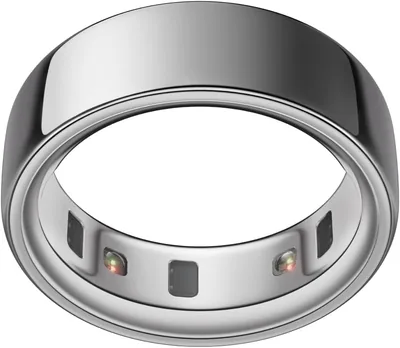
Oura Ring Gen 3
Smart ring with clinical-grade sleep tracking, HRV monitoring, Readiness scoring, temperature trends, and SpO2 sensing. The most accurate consumer sleep tracker available.
Sleep Tracking Accuracy — The Gold Standard
I kept manual sleep/wake logs for the first 60 days and compared against the Oura's automatic detection. Results: Oura detected my sleep onset within 5 minutes of my manual log 89% of the time. Sleep stage classification — REM, deep, light — aligned with my subjective experience (groggy mornings correlated with low deep sleep scores).
For context, I also wore a Garmin Venu 3S on my wrist simultaneously for the first 60 days. The Garmin was within 10-15 minutes on sleep onset and provided less granular stage data. Full comparison in my Oura vs Garmin head-to-head.
The data presentation is where Oura truly excels. Every morning, you get a clean sleep score (0-100) broken into contributors: total sleep, efficiency, restfulness, REM sleep, deep sleep, latency, and timing. After a few weeks, patterns emerge. I discovered that alcohol even 4 hours before bed dropped my deep sleep by 30-40%, and late-night screen time added 15-20 minutes to my sleep latency.
Readiness Score — The Killer Feature
The Readiness Score combines your sleep quality, HRV, resting heart rate, body temperature, and recent activity into a single 0-100 score. It answers the question: "Should I push hard today, or take it easy?"
I restructured my training around Readiness. On days above 80, I do intense workouts. On days between 60-80, I do moderate activity. Below 60, I rest or do light yoga. Over 6 months, my average sleep score improved from 72 to 79, and my subjective energy levels improved noticeably.
After 3 months of Readiness data, I noticed a clear weekly cycle: my worst scores consistently fell on Monday mornings, driven by later-than-usual weekend bedtimes. Shifting my Sunday bedtime 30 minutes earlier improved my Monday Readiness by an average of 8 points.
HRV Trends — 6 Months of Data
Heart rate variability (HRV) is one of the best biomarkers for overall recovery and stress. The Oura measures HRV during sleep using infrared sensors on your finger — a location that provides cleaner readings than wrist-based sensors.
My 6-month HRV trend shows a clear upward trajectory: from an average of 38ms in month one to 47ms in month six. That's a 24% improvement, which I attribute to better sleep habits (informed by Oura data), more consistent training (informed by Readiness scores), and reduced alcohol consumption (informed by seeing the data impact every morning).
The insight here is that the Oura Ring doesn't just track your health — it changes your behavior. When you see the direct impact of your choices in quantified sleep data, you make better decisions. That's the real value proposition.
Activity Tracking — Don't Expect a Garmin
The Oura Ring tracks steps, calories, and basic activity levels. It does not have GPS, real-time heart rate during exercise, or workout profiles. If you want fitness tracking, you need a dedicated watch — I pair my Oura with the Garmin Venu 3S for daytime use.
Step counting was within 5-8% of my Garmin in side-by-side testing. Calorie estimates felt roughly accurate. But this is not a fitness device — it's a sleep and recovery device that happens to count steps.
Battery Life & Comfort
Battery lasts 5-7 days in my experience with all tracking enabled. Charging takes about 80 minutes on the magnetic cradle. I charge it during my morning shower and routine — the only time it's off my finger.
Comfort is outstanding. After the first two days, I forget it's there. It weighs about 6 grams — lighter than most traditional rings. The titanium construction is durable; after 6 months, mine shows zero scratches. Crucially, it's far more comfortable for sleep than any wrist-worn device.
The Subscription Question
After a 6-month free trial, the Oura app requires a $5.99/month subscription for full features. Without it, you get basic sleep scores but lose Readiness, detailed HRV trends, guided content, and long-term trend analysis.
My take: the subscription is frustrating but, after 6 months, I'm paying it. The Readiness Score alone has enough impact on my daily decisions to justify $72/year. For the 2-year total cost comparison against the Garmin (which has no subscription), see my cost analysis.
What I Don't Like
Sizing can be tricky. Oura sends a free sizing kit, but finger size fluctuates with temperature and hydration. Wear the sizing ring for 2-3 days before ordering.
No real-time data. Unlike a watch, you can't glance at the ring for your heart rate. Everything lives in the app.
Limited third-party integration. Syncs with Apple Health and Google Health Connect, but direct Strava or MyFitnessPal integration is limited.
The subscription exists. Paying monthly for hardware you already bought never feels good.
Final Verdict — 6 Months Later
The Oura Ring Gen 3 is the best sleep tracker I've tested, and it's not close. The combination of accurate sleep staging, the Readiness Score, long-term HRV trends, and the invisible form factor makes it the only device I've worn every single night for 6 months.
The real value isn't in the data itself — it's in the behavioral change the data drives. I sleep better, train smarter, and make more informed daily decisions because of quantified feedback that was previously invisible.
Buy it if: sleep quality is a priority, you want the most accurate consumer sleep data, or you're willing to pay for the subscription. Pair it with a fitness watch for complete coverage.
Skip it if: you want an all-in-one fitness + sleep device (get the Garmin Venu 3S), you refuse to pay subscriptions, or sleep tracking isn't a priority. See my sleep products guide for alternatives.